Drug-Coated Balloon vs Drug-Eluting Stent: When Each Is Used
A drug-coated balloon treats a narrowed heart artery without leaving a metal stent behind. This guide explains how it differs from a drug-eluting stent, where cardiologists use each, and what recent trials and guidelines say.
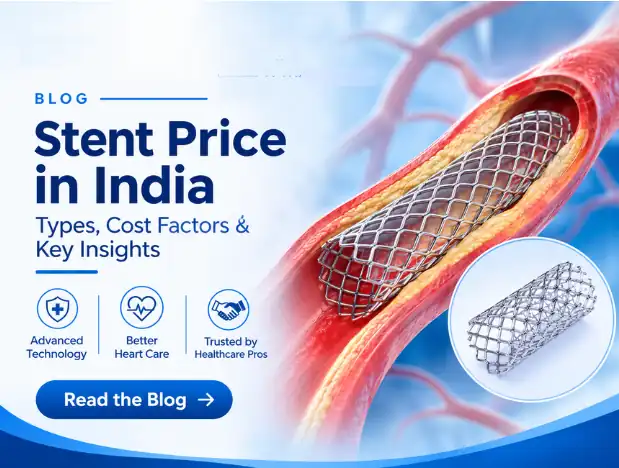
A drug-eluting stent (DES) is a metal mesh tube that stays in the artery and slowly releases a drug. A drug-coated balloon (DCB) delivers the drug to the artery wall during a short inflation and is then removed, so nothing is left behind. Stents remain the standard. DCBs are used mainly in small arteries, side branches and some restenosis.
How They Differ
| Drug-eluting stent | Drug-coated balloon | |
|---|---|---|
| What stays in the artery | A metal mesh tube, for life | Nothing; the balloon is removed |
| How the drug is given | Released slowly from the stent | Passed to the artery wall during inflation |
| Common drugs | Everolimus, sirolimus | Paclitaxel, sirolimus |
| Strength of evidence | Standard for most blockages | Strongest in small vessels and restenosis |
Both are used in angioplasty. See our angioplasty cost guide for how the procedure is priced.
Where a DCB Fits
- Small arteries: in a pooled analysis of 1,475 patients with vessels of 3 mm or less, major heart events at 3 years were 18.5% with a paclitaxel balloon and 24.5% with a stent.
- Side branches: in a trial of 784 patients, using a DCB on a pinched side branch after stenting the main vessel cut 1-year events from 12.5% to 7.2%.
- Restenosis inside an old stent: a DCB avoids adding another layer of metal. This can help when there are already several layers or the vessel is small.
- High bleeding risk: a DCB may allow a shorter course of two blood thinners, though this is still being studied.
Stocking a cath lab?Get a written quote, brochure or demo from the Pulse team.
Where Stents Still Lead
In the large REC-CAGEFREE I trial of 2,272 patients, a DCB strategy did not match stents across all vessel sizes. Events at 2 years were 6.4% with DCB and 3.4% with stents. In vessels under 3 mm, results were similar.
For restenosis inside a drug-eluting stent, the 2024 European guidelines recommend a new stent over a DCB. Some experts argue that a DCB is still useful in selected cases, such as many stent layers or small vessels.
Technique Matters
A DCB works best when the artery is well prepared first, usually with a plain balloon. If the artery tears badly or springs back after balloon treatment, the cardiologist places a stent instead. In one small-vessel trial where preparation was required, only 3.9% of patients needed a rescue stent. Imaging inside the artery (IVUS) also improved results in one trial.
Balloon choice and wire choice both matter. See our PTCA balloon price and coronary guidewire selection guides.
Paclitaxel or Sirolimus?
Paclitaxel balloons have the most evidence. Sirolimus enters the artery wall less easily, so newer sirolimus balloons use special coatings to help the drug get in. Trials comparing the two have mixed results so far.
Pulse Balloons and Stents
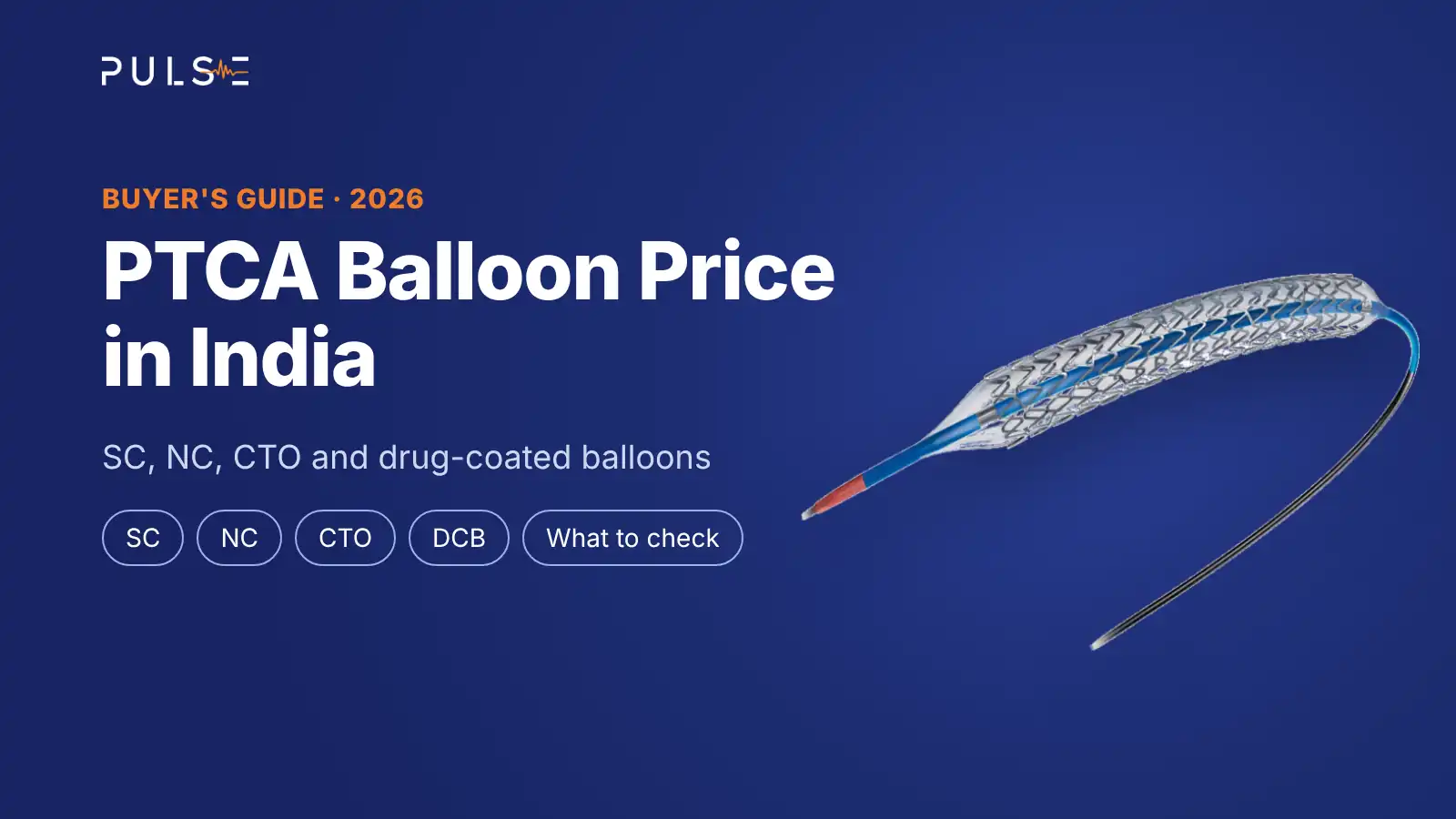
- Pulse Mamba DCB: sirolimus at 2.75 µg/mm² on a semi-compliant nylon balloon, 1.50 to 4.00 mm wide and 6 to 40 mm long, rapid exchange.
- Drug-eluting stents: EvroSure and Evera (everolimus), MedSure and Sirova (sirolimus).
- For lesion preparation: the Glider PTCA balloon and Optima inflation kit.
Pulse stents are CDSCO cleared and CE marked. See our stent price guide.
Drug-Coated Balloon vs Stent: Key Facts
- A drug-coated balloon delivers drug to the artery wall and leaves no metal behind.
- DCBs have their strongest evidence in small arteries and in-stent restenosis.
- In REC-CAGEFREE I, a DCB strategy did not match stents across all vessel sizes.
- For restenosis inside a drug-eluting stent, 2024 European guidelines prefer a new stent.
- Good lesion preparation is essential; a stent is placed if the result is poor.
Drug-Coated Balloon vs Stent: FAQs
What is the difference between a drug-coated balloon and a stent?
A stent is a metal mesh tube that stays in the artery for life. A drug-coated balloon passes the drug to the artery wall during inflation and is removed, so nothing is left behind.
When is a drug-coated balloon used instead of a stent?
Mainly in small arteries, pinched side branches and some cases of restenosis inside an old stent. Stents remain the standard for most blockages.
Is a drug-coated balloon as good as a stent?
In small arteries, trials show similar or better results. Across all vessel sizes, the large REC-CAGEFREE I trial found stents did better.
Can a stent be needed after a drug-coated balloon?
Yes. If the artery tears badly or springs back after balloon treatment, the cardiologist places a stent.
Which drug is used on drug-coated balloons?
Paclitaxel has the most evidence. Sirolimus balloons use special coatings to help the drug enter the artery wall.
Does Pulse supply drug-coated balloons?
Yes. The Pulse Mamba is a sirolimus-coated balloon from 1.50 to 4.00 mm. Message +91 90711 01108 for a quote.
Sources
- Drug-coated balloons: recent evidence and upcoming novelties (Journal of Cardiovascular Development and Disease, 20 May 2025): small vessels, side branches, REC-CAGEFREE I, drugs, technique
- Drug-coated balloon angioplasty for in-stent restenosis: pros and cons (EuroIntervention, January 2025): 2024 ESC guideline on restenosis
- Leaving nothing behind: expanding the clinical frontiers of drug-coated balloon angioplasty (Journal of Cardiovascular Development and Disease, 5 May 2025): small vessels under 3 mm
Related Reading