GeM Portal for Medical Equipment: How Hospitals Buy and How to Sell
Most government hospitals in India buy equipment through GeM, the Government e-Marketplace. This guide explains how it works, how a maker or dealer signs up, what it costs, and the Make in India rules.
GeM (Government e-Marketplace) is the online portal that government buyers, including government hospitals, use to buy goods and services. Seller registration is free, and GeM removed caution money for sellers in August 2025, along with lower vendor assessment fees and transaction charges. Makers may need a factory check; dealers need the maker's written approval.
What Is GeM?
GeM is the government's online market for public buying. It started in 2016. Government hospitals, medical colleges and health departments place orders or bids on it, and sellers list products and quote. It handled about Rs 5.4 lakh crore of orders in 2024–25.
How Government Hospitals Buy on GeM
- Direct purchase: for small orders, the buyer can pick a listed product directly.
- L1 purchase: the buyer compares sellers and buys the lowest price that meets the spec.
- Bid or reverse auction: for big orders, the buyer posts a bid with specs and sellers compete.
Bids for medical equipment usually ask for a CDSCO licence, quality papers, set-up, training, warranty and service terms. See our CDSCO licence vs CE and US FDA guide.
What Changed for Sellers in 2025
On its ninth foundation day in August 2025, GeM announced three reforms for sellers:
- Caution money (a security deposit) was removed for sellers.
- Vendor assessment fees were reduced.
- Transaction charges were cut, so about 97% of orders carry no charge.
Buying for a government hospital?Get a written quote, brochure or demo from the Pulse team.
How to Register as a Seller
- Sign up on gem.gov.in with Aadhaar or PAN and a mobile number. Registration is free.
- Fill in your firm details, bank account, GST and tax returns.
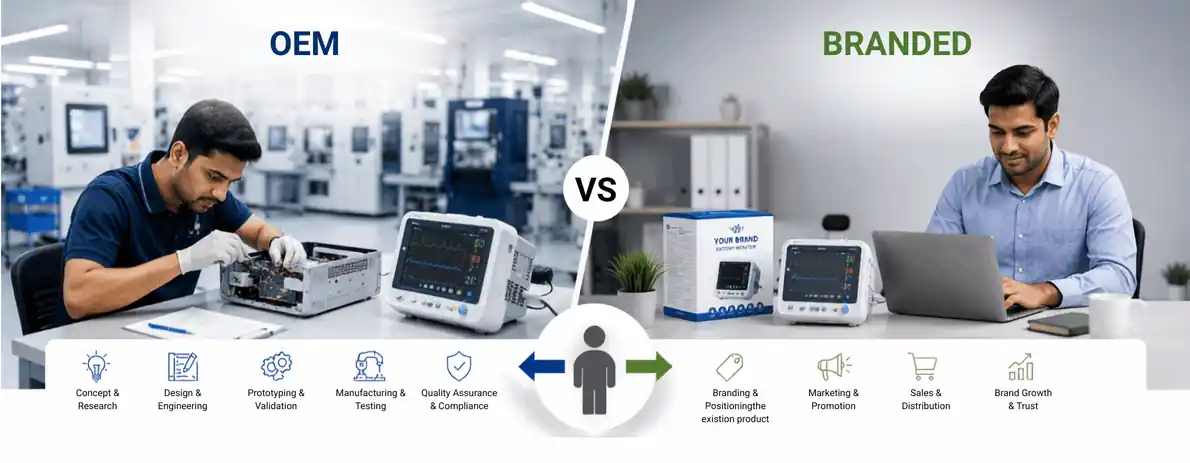
- Choose your role. A maker (OEM) gets its brand approved and may need a check of its factory and quality system. A dealer lists the maker's products with the maker's written approval.
- Add products to the right GeM groups, with specs, certificates and prices.
- Watch for bids in your categories and respond before the deadline.
To sell medical devices at all, a dealer also needs a sale licence or MD-42 registration. See our guide to becoming a distributor.
Make in India Rules in Government Buying
Under the Make in India buying order of 2017, government buyers must prefer local suppliers. For medical devices, the Department of Pharmaceuticals sets how much must be made in India. A list of about 354 advanced devices may still be bought through global tenders, and the list was under review in 2026. So check the "Class-I local supplier" terms in each bid.
Tips for Medical Equipment Sellers on GeM
- Keep CDSCO licences, ISO 13485 and other papers up to date and uploaded.
- Write clear specs that match common bid wording.
- Price in delivery, set-up, training and warranty, which bids usually include.
- Remember that government hospitals deduct 2% GST TDS on contracts above Rs 2.5 lakh; see our GST guide.
- Plan service capacity: bids often set response times and penalties.
Pulse for Government Hospitals
Pulse products meet GeM portal requirements and national procurement standards. Pulse supplies government and private buyers across critical care, dialysis, cardiac care, lab and hospital setup, with installation, training and service across India. Ask the team for the certificates your bid needs, or see who we serve.
GeM for Medical Equipment: Key Facts
- GeM is the Government e-Marketplace that government hospitals and departments use to buy goods and services.
- Seller registration on GeM is free.
- In August 2025 GeM removed caution money for sellers, reduced vendor assessment fees and cut transaction charges, exempting about 97% of orders.
- Makers may need a vendor assessment; dealers list products with the maker's authorisation.
- Government buyers give preference to local suppliers under the Make in India procurement order.
GeM for Medical Equipment: FAQs
What is GeM?
GeM (Government e-Marketplace) is the online portal that central and state government buyers, including government hospitals, use to buy goods and services through direct purchase, L1 purchase or bids.
Is GeM seller registration free?
Yes. Seller registration on GeM is free. In August 2025 GeM also removed caution money for sellers and reduced vendor assessment fees and transaction charges.
Can a medical equipment dealer sell on GeM?
Yes. A dealer or reseller can list a maker's products with the maker's authorisation. It also needs a valid licence or MD-42 registration to sell medical devices.
What is vendor assessment on GeM?
An assessment of a maker's (OEM's) factory, processes and quality system before brand approval. Some sellers are exempt; check the current rules on the GeM portal.
Does Make in India preference apply to medical equipment on GeM?
Yes. Government buyers give preference to local suppliers under the Make in India procurement order. A list of about 354 advanced medical devices may be bought through global tenders.
Do Pulse products meet GeM requirements?
Yes. Pulse products meet GeM portal requirements and national procurement standards. Ask the team for the certificates your bid needs. Message +91 90711 01108.
Sources
- GeM marks ninth foundation day (IBEF on the Commerce Ministry release, August 2025): Rs 5.4 lakh crore GMV, caution money removed, fees and charges cut
- GeM registration 2026: process, fees and documents (Tender247, 2026): free registration, no caution money, OEM vendor assessment
- DoP seeks comments on list of 354 medical devices for global tender (Pharmabiz, February 2026): Make in India order and medical device exemptions
- Centre seeks views on medical devices exempt from GTE norms (Business Standard, June 2026)
Related Reading