Patient Monitor Readings Explained: Normal Values for Adults
A bedside monitor shows several numbers and wavy lines. This guide explains what each one means, the normal ranges for adults, why readings can be wrong and why alarms sound, in simple words for families, nurses and buyers.
Normal adult values at rest are a heart rate of 60 to 100 beats a minute, SpO2 of 95% to 100%, blood pressure between 90/60 and 120/80 mmHg, a breathing rate of 12 to 18 a minute and a temperature of 36.5°C to 37.3°C, according to Cleveland Clinic. Values change with age and illness, so doctors read them together.
Normal Values on a Patient Monitor (Adults)
| Reading | Shown as | Normal range at rest |
|---|---|---|
| Heart rate (pulse) | HR or PR | 60 to 100 beats per minute |
| Oxygen level | SpO2 | 95% to 100% |
| Blood pressure | NIBP | 90/60 to 120/80 mmHg |
| Breathing rate | RR or RESP | 12 to 18 breaths per minute |
| Temperature | TEMP | 36.5°C to 37.3°C |
These ranges are from Cleveland Clinic. Children have different normal ranges, and a doctor may set different targets for a sick patient.
What Each Reading Means
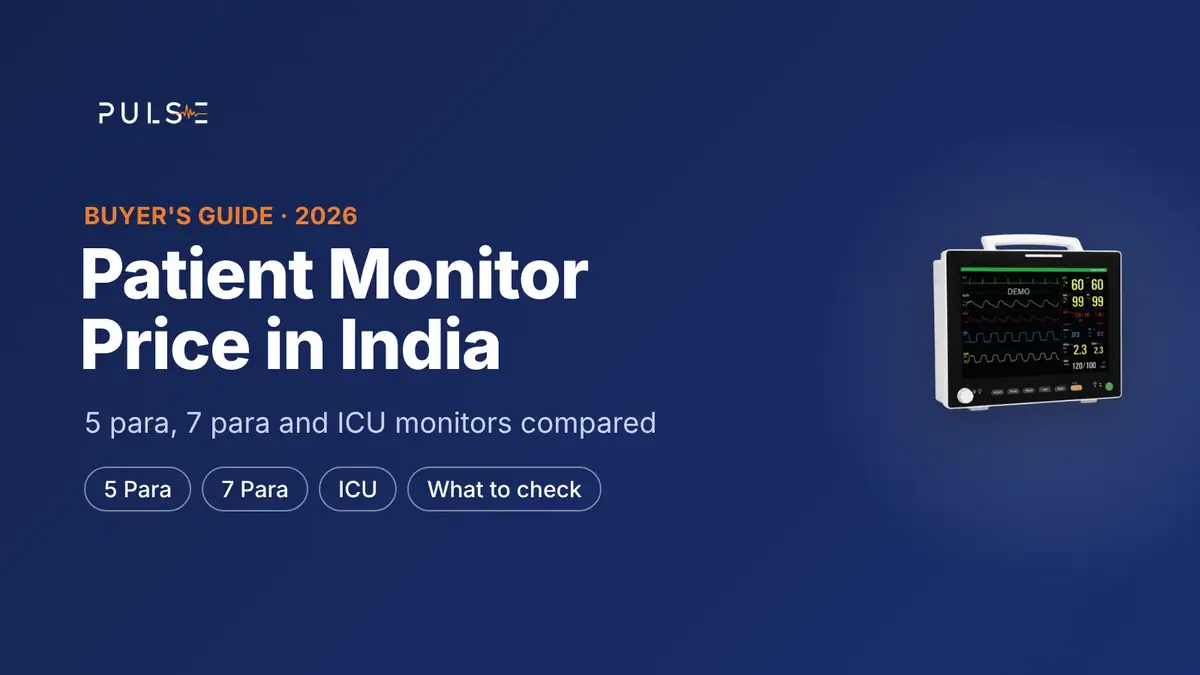
- ECG / HR: the green wavy line shows the heart's electrical rhythm. The number is the heart rate.
- SpO2: how much of the blood's haemoglobin is carrying oxygen, measured by a clip on the finger.
- NIBP: blood pressure from an arm cuff that inflates at set times. The top number is pressure when the heart beats; the bottom number is pressure between beats.
- RESP: breaths per minute, often picked up through the ECG leads.
- TEMP: body temperature from a probe.
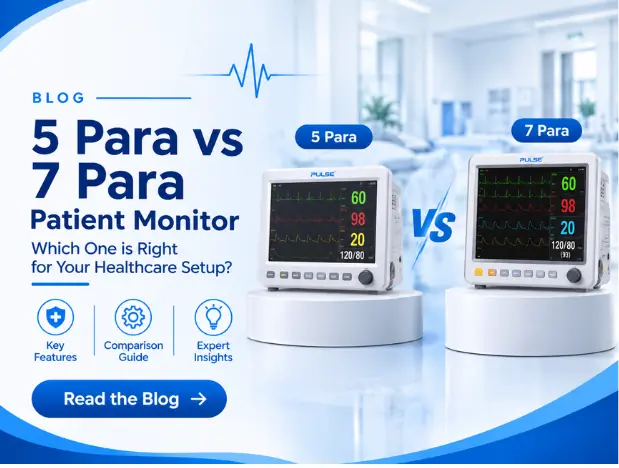
These five make up a 5-para monitor. A 7-para monitor adds readings such as EtCO2 (carbon dioxide in each breath out). See what EtCO2 means, and our 5 para vs 7 para monitor guide.
Equipping an ICU or ward?Get a written quote, brochure or demo from the Pulse team.
When Is SpO2 Too Low?
| SpO2 reading | What Cleveland Clinic advises |
|---|---|
| 95% to 100% | Normal |
| 92% or lower (at home) | Contact your doctor |
| 88% or lower | Get medical help right away |
In hospital, the care team sets the target for each patient.
Why Readings Can Be Wrong
- Cold hands or poor circulation can give a low or missing SpO2.
- Dark nail polish and long or artificial nails can block the sensor light.
- Skin tone can affect SpO2 accuracy.
- Carbon monoxide poisoning and some blood disorders can make SpO2 readings unreliable.
- A loose ECG lead or a moving patient can cause false heart rhythm alarms.
Why Monitor Alarms Go Off
Each reading has a high and a low alarm limit set by the care team. An alarm sounds when a reading crosses a limit, or when a sensor slips off. Many alarms are technical, not dangerous, but staff should always check the patient first, then the sensor.
For Hospitals and Clinics
Monitors are needed in ICUs, OTs, recovery rooms and emergency departments. See our patient monitor price and ICU setup cost guides.
Pulse Patient Monitors
Pulse supplies the 5-para monitor (12.1 inch display, ST-segment analysis, pacemaker detection, 3-level alarms, built-in battery) and the 7-para monitor with EtCO2 and cardiac output and adult, child and newborn NIBP modes. Pulse critical care devices are CDSCO cleared and CE marked, made under ISO 13485.
Patient Monitor Normal Values: Key Facts
- Normal adult resting heart rate is 60 to 100 beats a minute.
- Normal SpO2 is 95% to 100%; at 88% or lower, get medical help right away.
- Normal adult blood pressure is between 90/60 and 120/80 mmHg.
- Normal adult breathing rate is 12 to 18 a minute; temperature 36.5°C to 37.3°C.
- Cold hands, nail polish and skin tone can affect SpO2 readings.
Patient Monitor Normal Values: FAQs
What are normal patient monitor readings for adults?
Heart rate 60 to 100 a minute, SpO2 95% to 100%, blood pressure 90/60 to 120/80 mmHg, breathing rate 12 to 18 a minute and temperature 36.5°C to 37.3°C.
What is a normal SpO2 level?
95% to 100%. At home, contact a doctor at 92% or lower, and get medical help right away at 88% or lower.
What does NIBP mean on a monitor?
Non-invasive blood pressure, measured with an arm cuff that inflates at set times.
Why does a patient monitor alarm keep going off?
A reading has crossed its high or low limit, or a sensor has slipped. Staff should check the patient first, then the sensor.
Why is my SpO2 reading low or missing?
Cold hands, poor circulation, dark nail polish, artificial nails or movement can affect the finger sensor.
Does Pulse supply patient monitors?
Yes. Pulse supplies 5-para and 7-para patient monitors with 12.1 inch displays. Message +91 90711 01108 for a quote.
Sources
- Vital signs (Cleveland Clinic, last updated 15 March 2023): adult normal ranges
- Pulse oximetry (Cleveland Clinic, last updated 23 September 2025): normal SpO2, when to seek help, accuracy factors
Related Reading