Coronary Angiography: What to Expect Before, During and After
A coronary angiogram is an X-ray test that shows whether the heart arteries are narrowed or blocked. This guide explains why it is done, how to prepare, what you will feel during the test and how quickly most people recover.
In a coronary angiogram, a thin tube is passed from the wrist or groin to the heart, and dye is injected while X-rays are taken. You are usually awake, with local anaesthetic. The test takes 30 minutes to 2 hours, and most people go home the same day. Mild bruising is common.
Why It Is Done
Angiography uses dye and X-rays to show blood vessels clearly. For the heart, it helps doctors find narrowed or blocked coronary arteries, check the cause of angina, and plan treatment such as angioplasty. For costs, see our coronary angiography cost guide.
Before the Test
- The team checks your medical history, allergies and medicines, and tells you if any medicine must be stopped.
- You will have a physical check and a blood test.
- If you choose a sedative, you will need to stop eating for a few hours before.
- Arrange for someone to take you home, as you cannot drive yourself.
Stocking a cath lab?Get a written quote, brochure or demo from the Pulse team.
During the Test
- You lie on an X-ray table, usually awake.
- A small area at the wrist or groin is numbed with local anaesthetic.
- A thin, flexible tube (catheter) is guided through an artery to the heart. You may feel pushing or pulling, but it should not hurt.
- Dye is injected. For a few seconds you may feel warm or flushed, or feel like you need to pass urine.
- X-rays are taken as the dye flows through the arteries.
The test takes 30 minutes to 2 hours. If a narrowing is found, angioplasty can sometimes be done straight away. See our wrist vs groin access guide.
After the Test
- You lie still for a few hours while pressure is kept on the puncture site. No stitches are needed.
- Most people go home the same day; some stay overnight.
- Rest for the rest of the day, and have someone stay with you for 24 hours.
- Drink plenty of water to help flush out the dye.
- Most normal activities can restart the next day, but avoid heavy lifting and hard exercise for a few days.
Risks
Angiography is generally safe. Bruising, soreness or a small lump at the puncture site for a few days or weeks is common. Serious problems, such as an allergic reaction to the dye, a stroke or a heart attack, are very rare. If you have a stent placed, see our recovery after angioplasty guide.
What a Cath Lab Uses
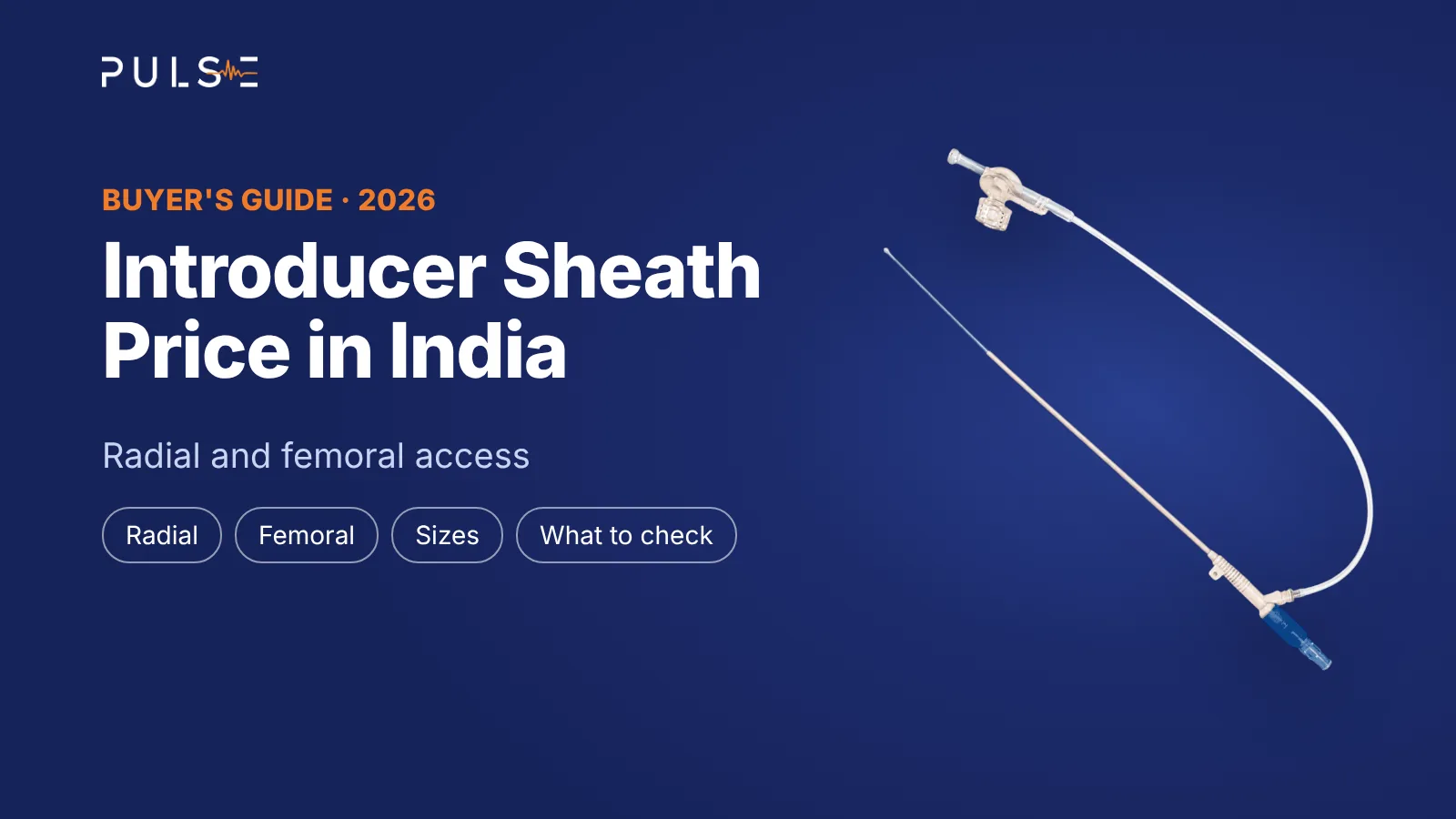
An angiogram uses an access needle and sheath, a guidewire, catheters, a manifold and pressure line, and contrast dye. Pulse supplies AcuSafe micro-access kits, GuideX guidewires and Optima angiography manifolds. Pulse does not supply diagnostic catheters or cath lab imaging systems.
Coronary Angiography: What to Expect: Key Facts
- A coronary angiogram uses dye and X-rays to show narrowed or blocked heart arteries.
- It is done under local anaesthetic through the wrist or groin.
- The test takes 30 minutes to 2 hours, and most people go home the same day.
- Bruising and soreness at the puncture site are common for a few days.
- Serious complications such as stroke or heart attack are very rare.
Coronary Angiography: What to Expect: FAQs
Is coronary angiography painful?
It should not hurt. The puncture site is numbed with local anaesthetic, though you may feel pushing or pulling.
How long does a coronary angiogram take?
Between 30 minutes and 2 hours, and most people go home the same day.
Do I need to fast before an angiogram?
If you have a sedative, you will need to stop eating for a few hours before. Your hospital will tell you exactly what to do.
What does the dye feel like?
For a few seconds you may feel warm or flushed, or feel like you need to pass urine.
What are the risks of coronary angiography?
Bruising and soreness are common. Serious problems such as an allergic reaction to the dye, stroke or heart attack are very rare.
Does Pulse supply cath lab consumables?
Yes. Pulse supplies access kits, guidewires, manifolds, balloons and stents. Message +91 90711 01108 for a quote.
Sources
- Angiography: what happens (NHS, last reviewed 30 January 2023): preparation, steps, sensations, recovery
- Angiography (NHS, last reviewed 30 January 2023): uses, duration, risks
Related Reading