Abnormal ECG Report: What It Means and What Happens Next
An ECG report that says "abnormal" can be worrying. This guide explains what the common report terms mean, why an abnormal ECG does not always mean heart disease, and which tests may come next.
An abnormal ECG means the tracing is outside the usual pattern. It does not always mean something is wrong with your heart (British Heart Foundation). It can point to an irregular heartbeat, a problem with how electrical signals spread, an enlarged heart, reduced blood supply or a past heart attack. A doctor reads it with your symptoms and history, and may order more tests such as an echo or Holter.
What Does an Abnormal ECG Mean?
An ECG records the rhythm, rate and electrical activity of the heart. An "abnormal" result means something in the tracing is outside the usual pattern. The British Heart Foundation (BHF) says an abnormal ECG reading does not always mean there is something wrong with your heart.
The ECG is usually one of the first heart tests you have. It has limits, so you may need one or more other tests too (BHF).
What an Abnormal ECG Can Show
The BHF says an abnormal ECG can point to:
| Finding | In plain words |
|---|---|
| Arrhythmia | The heart beats irregularly, too fast or too slow |
| Conduction problem | Electrical signals do not spread through the heart in the usual way |
| Enlarged heart | The heart muscle is thicker or the heart is bigger than usual |
| Reduced blood supply | Part of the heart may not be getting enough blood |
| Silent heart attack | A past heart attack that happened without the usual symptoms |
Common Terms on an ECG Report
| Term on the report | What it means |
|---|---|
| Sinus rhythm | The heartbeat starts in its natural pacemaker. This is the normal pattern. |
| Sinus bradycardia / tachycardia | Normal rhythm, but slower or faster than usual |
| Sinus arrhythmia | The rate changes a little with breathing |
| Atrial fibrillation (AF) | An irregular rhythm from the upper chambers |
| Bundle branch block (RBBB / LBBB) | A delay in the electrical signal to one side of the heart |
| Axis deviation | The overall direction of the electrical signal is shifted |
| LVH | Signs the main pumping chamber may be thickened |
| ST-T changes / T wave inversion | Changes in the recovery part of each beat; can have many causes |
| Nonspecific ST-T changes | Small changes that do not point to any one cause |
| Q waves / old infarct | Possible sign of a past heart attack |
| Borderline ECG | The computer found something close to the normal limit |
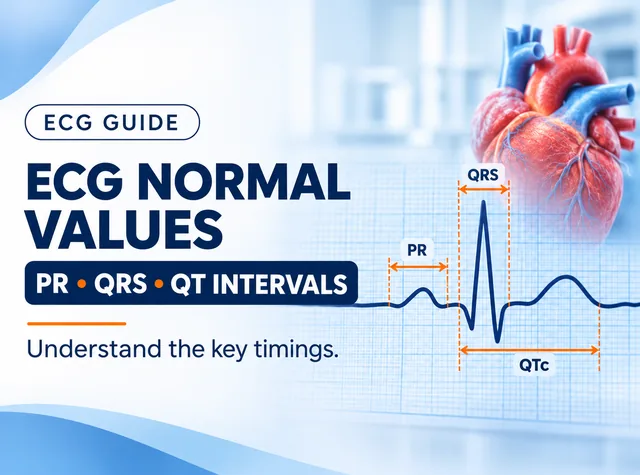
For normal timing values, see our ECG normal values guide.
Buying ECG machines for your hospital?Get a written quote, brochure or demo from the Pulse team.
Findings That Are Often Harmless
A guide for doctors from Nationwide Children’s Hospital lists findings that are commonly seen as normal or normal variants in children and young people. They include:
- sinus bradycardia and sinus arrhythmia
- an appropriate sinus tachycardia
- incomplete right bundle branch block on its own
- early repolarisation
- nonspecific ST-T wave changes
The same guide says the ECG should always be read together with the person’s history, examination and symptoms.
The Computer Reading Is Not the Final Word
Most ECG machines print an automatic reading at the top. A study of 2,072 ECGs at a US hospital found significant disagreement between the computer and cardiologists in 9.9% of all ECGs and 15.9% of abnormal ECGs (Journal of Electrocardiology, via PubMed). The most frequent errors were in rhythms, conduction problems and pacemakers.
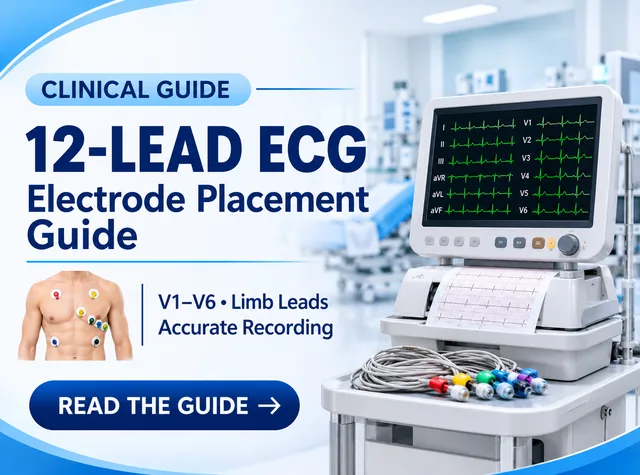
So a printed "abnormal" or "borderline" label needs a doctor to read the tracing. A wrong electrode position can also change the tracing; see our ECG lead placement guide. We suggest asking for a repeat ECG if the leads may have been placed wrongly.
What Happens Next?
Depending on the result and your symptoms, you may need other tests (BHF):
| Test | Why it may be done |
|---|---|
| Repeat ECG | To check whether the change is still there |
| Echo | To look at heart size, pumping and valves. See ECG vs echo. |
| Holter (24-hour ECG) | To catch rhythm problems that come and go. The NHS says it is usually worn for 24 to 48 hours, and up to 7 days. |
| Exercise ECG (TMT) | To see how the heart copes with effort |
| Blood tests | For example potassium and other salts. See our KFT test guide. |
| Angiogram | To look at the heart arteries if a blockage is suspected. See angiogram vs angioplasty. |
The NHS says you may get ECG results the same day, but it can take a few weeks depending on the type of ECG. If you have not heard anything after a few weeks, contact the doctor who referred you.
When an Abnormal ECG Is Urgent
An ECG done for chest pain can help doctors tell if you are having a heart attack (BHF). If you have chest pain, breathlessness, fainting or a racing heartbeat, do not wait for a report: call an ambulance (108 or 112 in India) or go to the nearest emergency department.
Questions to Ask Your Doctor
- Which part of my ECG is abnormal, and what could cause it?
- Is this new, or was it on my old ECGs too?
- Do I need more tests, and how soon?
- Could any of my medicines affect the ECG?
- Is there anything I should avoid until the tests are done?
We suggest keeping copies of all your ECGs. Comparing with an old tracing often helps the doctor decide quickly. For costs, see our ECG test price guide.
For Hospitals: Pulse ECG Machines
Pulse supplies 3 channel, 6 channel and 12 channel ECG machines for clinics, wards and ICUs.
Abnormal ECG: Key Facts
- An abnormal ECG reading does not always mean something is wrong with your heart (BHF).
- An abnormal ECG can point to an arrhythmia, a conduction problem, an enlarged heart, reduced blood supply or a silent heart attack (BHF).
- Computer and cardiologist readings disagreed significantly in 15.9% of abnormal ECGs in one study of 2,072 ECGs.
- A Holter ECG is usually worn for 24 to 48 hours, and up to 7 days (NHS).
- With chest pain, do not wait for a report: call an ambulance.
Abnormal ECG: FAQs
What does an abnormal ECG mean?
It means the tracing is outside the usual pattern. It can point to an irregular heartbeat, a conduction problem, an enlarged heart, reduced blood supply or a past heart attack, but the British Heart Foundation says it does not always mean something is wrong with your heart.
Is an abnormal ECG serious?
Not always. Some findings are harmless or normal variants. A doctor reads the ECG with your symptoms, history and old ECGs, and may order more tests. If you have chest pain or breathlessness, get emergency help.
What does borderline ECG mean?
It means the machine found something close to the normal limit. A doctor should read the tracing; often it is not significant, but it may need a repeat or further tests.
What does nonspecific ST-T change mean?
Small changes in the recovery part of each heartbeat that do not point to one cause. They can be harmless, and a hospital guide lists them among common normal-variant findings in young people, but a doctor should check them with your symptoms.
Can an ECG be wrong?
The automatic computer reading can be. One study of 2,072 ECGs found significant computer and cardiologist disagreement in 15.9% of abnormal ECGs. Wrong electrode placement can also change the tracing.
What tests come after an abnormal ECG?
Common next tests are a repeat ECG, an echo, a Holter (24-hour ECG), an exercise ECG (TMT), blood tests, and sometimes an angiogram.
Can anxiety cause an abnormal ECG?
Anxiety can raise the heart rate, which shows as sinus tachycardia. We suggest telling the person doing the test if you feel anxious, and asking the doctor whether a repeat is needed.
Does Pulse supply ECG machines?
Yes. Pulse supplies 3, 6 and 12 channel ECG machines. Message +91 90711 01108 for a quote.
Sources
- ECG (British Heart Foundation): abnormal reading does not always mean a heart problem; first test; limits; heart attack detection
- Electrocardiogram (ECG) (British Heart Foundation, Heart Matters): what an abnormal ECG can show; more tests may follow
- Electrocardiogram (ECG) (NHS): Holter wear time, getting results
- Evaluating ECG results (Nationwide Children’s Hospital): common normal and normal-variant findings
- Errors in computer ECG reading (Journal of Electrocardiology, via PubMed): 2,072 ECGs, disagreement 9.9% overall and 15.9% of abnormal ECGs
Related Reading