Medicine Trolley Price in India: Types, Locks and NABH Storage
Nurses carry medicines from the store to the bedside many times a day. This guide shows what a medicine trolley costs, which features keep drugs safe, and what NABH expects for storing them.
A medicine trolley in India costs about Rs 7,000 to Rs 8,500 for a basic mild steel ward trolley with open shelves, and about Rs 10,000 to Rs 25,000 for a cart with lockable drawers, based on online listings checked in November 2026. Stainless steel frames, more drawers and a central lock add to the price.
Medicine Trolley Price in India
These are listed prices from Indian online medical stores, checked in November 2026. They are other brands' prices, not Pulse prices. Some include GST and some do not, so check before you compare.
| Type | Listed price | What you get |
|---|---|---|
| Basic ward trolley, mild steel | Rs 7,000 – 8,500 | Two open shelves; good for dressings and supplies |
| 4-drawer medicine trolley | Rs 9,999 – 18,076 | Drawers for each patient or drug group; some with locking wheels |
| Deluxe trolley with lockable drawers | Rs 14,455 – 25,107 | Lockable drawers, top work surface, quiet wheels |
| Stainless steel frame with ABS shelves | About Rs 21,499 | Rust-free frame, easy-clean plastic shelves |
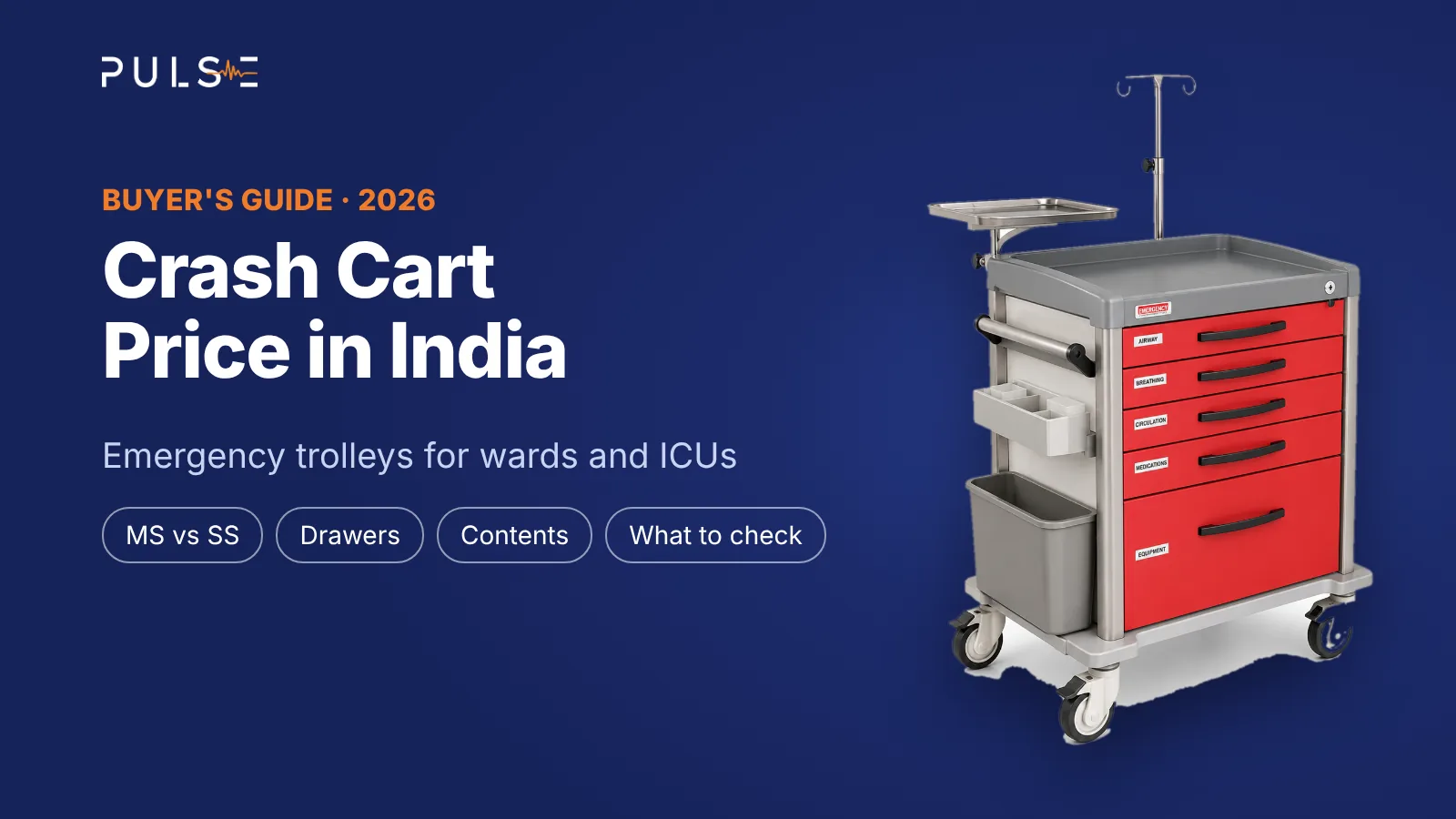
An emergency crash cart costs more, because it carries a defibrillator shelf, oxygen and resuscitation kit. See our crash cart price guide.
Medicine Trolley vs Crash Cart vs Instrument Trolley
- Medicine trolley: for the daily medicine round on a ward. Drawers hold each patient's doses, and a lock keeps them safe.
- Crash cart: for emergencies such as cardiac arrest. Drawers are set out for drugs, airway kit and IV fluids, with space for a defibrillator.
- Instrument trolley: an open steel trolley that holds sterile instruments during a procedure or dressing. See our instrument trolley price guide.
Equipping wards or nursing stations?Get a written quote, brochure or demo from the Pulse team.
Features That Matter
- Lock: a central lock that closes all drawers with one key saves time and keeps drugs safe between rounds.
- Drawers and dividers: movable dividers let you set out doses by patient or by bed number.
- Frame: stainless steel lasts longer and does not rust after cleaning. Powder-coated mild steel costs less.
- Top surface: an ABS or steel top gives a clean place to prepare doses and check charts.
- Wheels: quiet wheels for night rounds, with brakes on at least two.
- Size: check that it fits through ward doors and between beds.
NABH Rules for Storing Medicines
NABH's chapter on managing medicines (MOM) covers the whole cycle, from buying and storing drugs to giving them and watching for side effects. For trolleys and ward stock, a common NABH pharmacy checklist asks for:
- Look-alike, sound-alike (LASA) drugs on a list, stored apart or colour coded, including in the fridge.
- High-risk medicines on a list and kept in a protected place, so they are not given by mistake.
- Narcotic (NDPS) drugs in a locked container, with a register of every dose issued.
- Expiry checks: first in, first out, with near-expiry stock marked.
- Storage as the maker advises: clean, dry and at the right temperature.
Before each dose, staff check the right patient, drug, dose, route and time. A trolley with labelled drawers and a lock makes these checks easier. For equipment records, see our NABH medical equipment requirements guide.
How Many Medicine Trolleys Do You Need?
We suggest at least one medicine trolley for each nursing station, one for each ICU, and a spare for large wards or busy shifts. Keep it separate from the crash cart, which must stay fully stocked for emergencies.
Pulse Medicine Cart
The Pulse Medicine Cart has drawers with adjustable dividers, a central key lock, an ABS top and smooth-rolling wheels. Pulse also supplies crash carts, instrument trolleys and the rest of a ward set-up as part of a hospital setup order.
Medicine Trolley Price: Key Facts
- Basic mild steel ward trolleys are listed at about Rs 7,000 to Rs 8,500 in India (November 2026).
- Medicine trolleys with lockable drawers cost about Rs 10,000 to Rs 25,000.
- A central lock, drawer dividers, a stainless steel frame and quiet wheels add to the price.
- NABH expects LASA and high-risk drugs to be identified and stored safely, and narcotics locked with a register.
- A medicine trolley is for daily rounds; a crash cart is kept stocked for emergencies.
Medicine Trolley Price: FAQs
What is the price of a medicine trolley in India?
Online listings checked in November 2026 show basic mild steel ward trolleys at about Rs 7,000 to Rs 8,500, and medicine trolleys with lockable drawers at about Rs 10,000 to Rs 25,000.
What is the difference between a medicine trolley and a crash cart?
A medicine trolley is used for the daily medicine round and holds each patient's doses in locked drawers. A crash cart is kept ready for emergencies, with drugs, airway kit and space for a defibrillator.
What features should a medicine trolley have?
A central lock, drawers with movable dividers, a clean top surface, a rust-free frame and quiet wheels with brakes.
What does NABH say about storing medicines on wards?
NABH's medication chapter covers storage. A common checklist asks for LASA drugs to be stored apart or colour coded, high-risk drugs to be kept protected, narcotics locked with a register, and expiry dates checked.
How many medicine trolleys does a hospital need?
We suggest at least one for each nursing station and each ICU, plus a spare for large wards. Keep it separate from the crash cart.
Does Pulse supply medicine trolleys?
Yes. The Pulse Medicine Cart has drawers with dividers, a central key lock, an ABS top and smooth wheels. Message +91 90711 01108 for a quote.
Sources
- Medicine trolley listings (Medikabazaar, checked November 2026): Rs 14,455 to Rs 25,107
- Medicine trolley listings (MeddeyGo, checked November 2026): Rs 9,999 to Rs 21,499
- Ward and medicine trolley listings (IndiaMART, checked November 2026): Rs 7,000 to Rs 8,500
- Management of Medication (MOM) masterclass, 6th edition (NABH): what the chapter covers
- Checklist for pharmacy and its quality indicators (RelyHealthTech, NABH preparation): LASA, high-risk, NDPS, expiry and storage
Related Reading