How an Anaesthesia Machine Works: A Simple Guide to the Parts
An anaesthesia machine keeps a patient asleep and breathing during surgery. This guide follows the gas from the wall or cylinder to the patient and back, and explains each part and safety feature in simple words.
An anaesthesia machine takes oxygen, air and other gases from the hospital pipeline or cylinders, lowers their pressure, and lets the anaesthetist set the flow. A vaporiser adds anaesthetic vapour, a breathing circuit carries it to the patient and removes carbon dioxide, a ventilator can breathe for the patient, and scavenging takes waste gas out of the theatre.
The Four Jobs of the Machine
A StatPearls review lists four main jobs:
- Give the patient oxygen.
- Mix the anaesthetic vapour accurately.
- Help the patient breathe.
- Keep anaesthetic gas away from theatre staff.
When it has a built-in ventilator and monitors, it is often called a workstation.
Following the Gas
| Stage | What happens |
|---|---|
| 1. Gas supply | Oxygen, air and nitrous oxide come from the hospital pipeline, or from cylinders on the back of the machine if the pipeline fails |
| 2. Pressure regulators | Cylinder gas is stored at very high pressure (about 2,200 psi for oxygen). A regulator lowers it to about 45 psi, close to pipeline pressure (about 50 psi) |
| 3. Flowmeters | The anaesthetist sets how many litres a minute of each gas flow on |
| 4. Vaporiser | Fresh gas passes through a vaporiser that adds a set amount of anaesthetic vapour |
| 5. Breathing circuit | Gas goes to the patient through tubes and one-way valves; breathed-out carbon dioxide is removed |
| 6. Ventilator | Breathes for the patient when needed, instead of squeezing the bag by hand |
| 7. Scavenging | Extra gas is captured and carried out of the theatre |
Pressures are from StatPearls. For how much a machine costs, see our anaesthesia machine price guide.
Equipping an operation theatre?Get a written quote, brochure or demo from the Pulse team.
The Vaporiser
Gas drugs used to put people to sleep, such as sevoflurane, are stored as liquids. The vaporiser turns a set amount into vapour and adds it to the gas. Each vaporiser is made for one drug only. A dial sets the dose.
The Breathing Circuit
- One-way valves keep gas moving in a circle: in through one tube, out through the other.
- CO2 absorber: a canister of granules that soaks up the carbon dioxide the patient breathes out, so the rest of the gas can be breathed again. The granules change colour as they get used up; StatPearls says to change them when about two-thirds have changed.
- Reservoir bag: the anaesthetist can squeeze it to breathe for the patient by hand.
- APL valve: a pressure relief valve. It is left open when the patient breathes on their own and partly closed when breathing for them.
Built-in Safety Features
- Pin index and diameter index systems: each gas has its own shaped fitting, so a cylinder or pipeline cannot be plugged into the wrong inlet.
- Hypoxic guard: oxygen and nitrous oxide controls are linked, so the machine will not deliver a mix with less than 21% oxygen.
- Vaporiser interlock: only one vaporiser can be turned on at a time.
- Oxygen flush: a button that sends 35 to 70 litres a minute of pure oxygen in an emergency. It skips the vaporiser, so it must be used with care.
- Alarms and monitors: modern machines watch oxygen, carbon dioxide and pressure and sound an alarm when something is wrong.
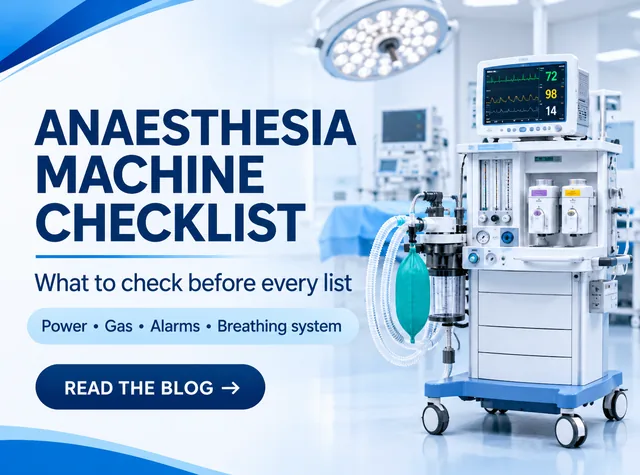
All of this only helps if the machine is checked before use. See our anaesthesia machine checklist.
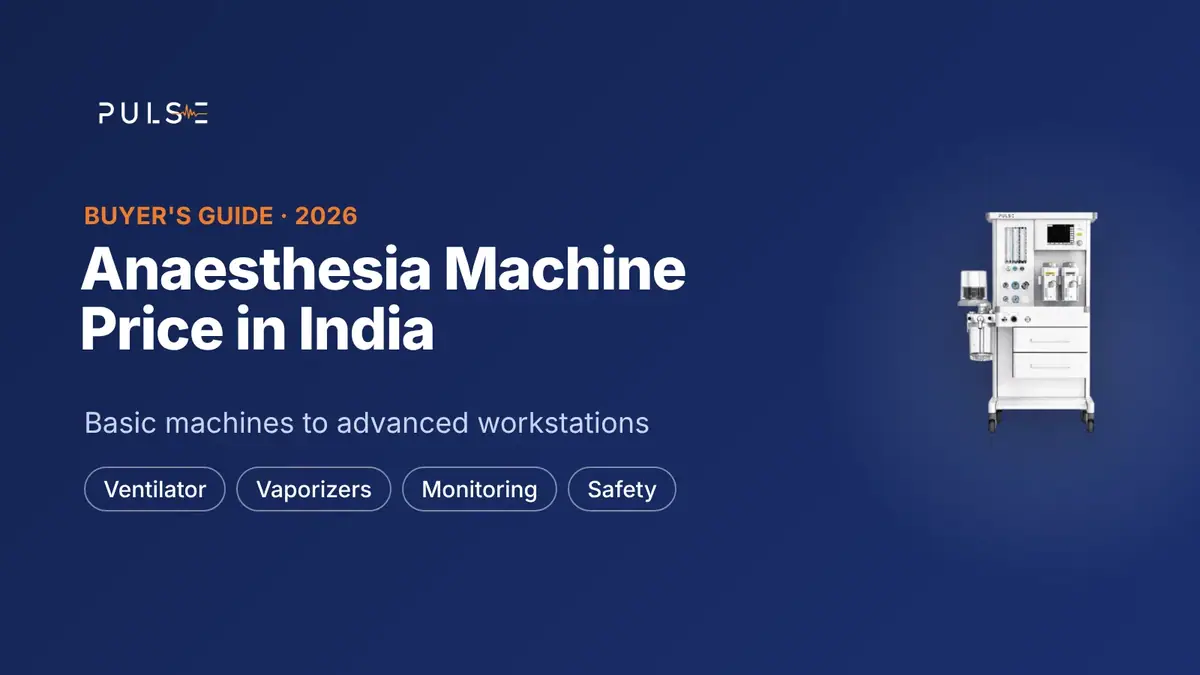
The Pulse Anaesthesia Workstation
| Feature | Pulse workstation |
|---|---|
| Patients | Adult and paediatric |
| Vaporisers | Two, with an interlock so only one runs at a time |
| Flowmeters | Double-tube flowmeter for each gas, suitable for low-flow anaesthesia |
| Ventilation | One key switches from bag to machine; tidal volume 20 to 1,500 ml; rate 2 to 100 breaths a minute |
| Monitoring | FiO2, CO2 and MAC; optional EtCO2 and anaesthetic gas monitoring |
| Scavenging | Optional AGSS |
| Backup battery | At least 120 minutes |
Pulse critical care equipment carries CDSCO registration, CE marking and ISO 13485 certification.
How an Anaesthesia Machine Works: Key Facts
- An anaesthesia machine gives oxygen, mixes anaesthetic vapour, helps breathing and protects staff from waste gas.
- Cylinder oxygen is about 2,200 psi; a regulator lowers it to about 45 psi, near pipeline pressure.
- Each vaporiser is made for one anaesthetic drug.
- A CO2 absorber removes breathed-out carbon dioxide so gas can be breathed again.
- A hypoxic guard stops mixes with less than 21% oxygen.
How an Anaesthesia Machine Works: FAQs
How does an anaesthesia machine work?
It takes gases from the pipeline or cylinders, lowers their pressure, sets the flow, adds anaesthetic vapour, and delivers it to the patient through a breathing circuit with a ventilator.
What are the main parts of an anaesthesia machine?
Gas supply and regulators, flowmeters, vaporiser, breathing circuit with CO2 absorber and valves, ventilator, monitors and scavenging system.
What is the difference between an anaesthesia machine and a workstation?
A workstation is an anaesthesia machine with a built-in ventilator, monitors and alarms in one unit.
What does the vaporiser do?
It turns a set amount of liquid anaesthetic into vapour and adds it to the fresh gas. Each vaporiser is made for one drug.
What stops the machine giving too little oxygen?
A hypoxic guard links the oxygen and nitrous oxide controls so the mix cannot fall below 21% oxygen, and an oxygen alarm warns staff.
Does Pulse supply anaesthesia workstations?
Yes. The Pulse workstation suits adults and children, has two vaporisers with an interlock and optional gas monitoring. Message +91 90711 01108 for a quote.
Sources
- Anesthesia Machine (StatPearls): four functions, gas pressures, vaporisers, breathing circuit, CO2 absorber, APL valve, scavenging and safety features
- Pulse anaesthesia workstation product page: features and specifications
Related Reading