Electrical Safety Testing of Medical Equipment (IEC 62353)
A machine can work well and still leak current to a patient. Electrical safety tests find this before it causes harm. This guide covers the tests, the pass limits and how often to test.
Hospital equipment is tested to IEC 62353, adopted in India as IS/IEC 62353. The main checks are protective earth resistance (300 mΩ or less), insulation, and leakage current. Equipment leakage must stay under 500 µA for Class I machines. Parts that touch the heart (type CF) must stay under 50 µA.
Why Test for Electrical Safety
Every mains-powered machine leaks a little current. Wear, damage or a bad repair can raise it. A patient connected to leads or probes can carry that current. Safety tests check that it stays within safe limits.
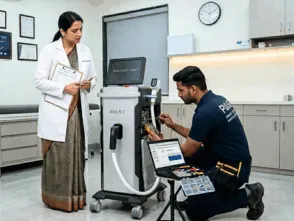
India's NHSRC maintenance guidelines say a qualified person should test each machine with an electrical safety analyser as part of maintenance.
The Standard: IEC 62353
IEC 62353 covers safety tests on medical electrical equipment. It is used before first use, during maintenance, after repair, and at regular checks. India adopted it as IS/IEC 62353. A newer edition came out in 2014. IEC 60601-1 is a different standard, used for type tests when a device is designed.
The Tests, in Order
- Visual check: look for damage to the case, cable, plug and leads.
- Protective earth resistance: checks the earth path on Class I machines. The test current is at least 200 mA.
- Insulation resistance: done at 500 V DC. It is optional, so ask the maker first.
- Leakage current: equipment leakage, and applied part leakage for BF and CF parts.
- Function check: confirm the machine still works as it should.
Need your equipment tested?Get a written quote, brochure or demo from the Pulse team.
Pass Limits
| Test | Limit |
|---|---|
| Earth resistance, Class I machine with its power cable | 300 mΩ or less |
| Earth resistance, detachable power cable alone | 100 mΩ or less |
| Earth resistance, medical system | 500 mΩ or less |
| Equipment leakage, Class I (direct or differential method) | 500 µA |
| Equipment leakage, Class II (direct or differential method) | 100 µA |
| Applied part leakage, type BF | 5,000 µA |
| Applied part leakage, type CF | 50 µA |
| Applied part leakage, CF defibrillation paddles | 100 µA |
Sources: IS/IEC 62353 and Rigel Medical's guide to IEC 62353. The alternative test method has higher equipment limits: 1,000 µA for Class I and 500 µA for Class II.
What B, BF and CF Mean
- Type B: the part that touches the patient is linked to earth. Not for direct contact with the heart.
- Type BF: a floating part with more protection than B. Not for direct contact with the heart.
- Type CF: a floating part with the most protection. Suitable for direct contact with the heart.
The type is printed as a symbol on the machine and in its manual.
Extra Tests for Some Machines
The NHSRC guidelines list extra tests. Electrosurgical units need RF leakage and power output checks. Defibrillators need energy delivered, energy loss and battery checks.
How Often to Test
Follow the maker's manual. If it gives no interval, Rigel's guide suggests every 6 to 36 months, based on risk. We suggest testing at each preventive maintenance visit and after every repair. See our preventive maintenance schedule.
Keep the Results
Record each test result, the analyser used and the date in the machine's logbook. These records help with NABH. See our NABH equipment requirements guide.
Pulse Service and Support
Pulse installs its equipment, trains staff on site, and offers AMC and CMC plans.
Electrical Safety Testing: Key Facts
- IEC 62353 is the standard for in-service safety tests; India uses IS/IEC 62353.
- Earth resistance of a Class I machine with its cable must be 300 mΩ or less.
- Equipment leakage limit is 500 µA for Class I and 100 µA for Class II.
- Type CF parts, suitable for the heart, must leak under 50 µA.
- Test before first use, after repair and at regular checks.
Electrical Safety Testing: FAQs
Which standard is used for electrical safety testing of medical equipment?
IEC 62353, adopted in India as IS/IEC 62353. It covers tests before use, during maintenance and after repair.
What is the earth resistance limit for medical equipment?
Under IEC 62353, a Class I machine with its power cable must be 300 mΩ or less. A detachable cable alone must be 100 mΩ or less.
What is the leakage current limit for medical equipment?
Equipment leakage must be under 500 µA for Class I and 100 µA for Class II by the direct or differential method.
What is the difference between BF and CF applied parts?
Both are floating parts. CF has the most protection and is suitable for direct contact with the heart. Its leakage limit is 50 µA, against 5,000 µA for BF.
How often should electrical safety testing be done?
Follow the maker. If no interval is given, one guide suggests 6 to 36 months by risk. We suggest testing at each service and after every repair.
Does Pulse offer service for its equipment?
Yes. Pulse installs its equipment, trains staff and offers AMC and CMC plans. Message +91 90711 01108 for details.
Sources
- IS/IEC 62353 (2007) (Bureau of Indian Standards): earth resistance and leakage limits
- A Practical Guide to IEC 62353 (Rigel Medical, rev 4.1): test current, 500 V DC, B/BF/CF meanings, test intervals
- IEC 62353:2014 (IEC webstore): scope and edition
- Guidelines on Equipment Maintenance, Calibration and Testing (NHSRC, January 2025): safety analyser, qualified person, extra tests
Related Reading