AV Fistula vs Catheter for Dialysis: Which Access Is Better?
Haemodialysis needs a way to reach the blood, called vascular access. This guide compares the three types (fistula, graft and catheter): how soon each can be used, infection risk, how long they last, and how to look after a fistula.
An AV fistula is usually the best long-term access for haemodialysis: it has the lowest infection and clotting risk and lasts the longest, but needs about 6 weeks to several months to mature. A catheter can be used the same day but has the highest infection risk, so it is mostly used as a bridge until a fistula or graft is ready.
The Three Types of Dialysis Access
| Access | What it is | Ready to use | Infection risk |
|---|---|---|---|
| AV fistula | A surgeon joins an artery to a vein in the arm | About 6 weeks to several months | Lowest |
| AV graft | An artery and vein joined with a soft tube | Days to a few weeks | Higher than a fistula |
| Catheter | A tube in a large vein in the neck, chest or groin | Same day | Highest |
These points come from a US kidney care physician's guide (March 2025) and a US patient education site updated in November 2025.
Why a Fistula Is Usually Best
- It is made from your own blood vessels, with no added material.
- It has the lowest risk of infection and clots.
- It lasts a long time and gives fast blood flow for good cleaning.
The catch is time. A fistula must mature before it can be used, and some never fully mature. Not everyone has veins suitable for one, so planning early with a kidney doctor matters.
Running a dialysis unit?Get a written quote, brochure or demo from the Pulse team.
When a Catheter Is Used
A catheter is used when dialysis must start urgently, while a fistula is maturing, or when a fistula or graft is not possible. Its big advantage is that it can be put in and used the same day. Its downsides are a much higher risk of infection, slower blood flow, and narrowing of the veins with long-term use. Catheters must be kept dry.
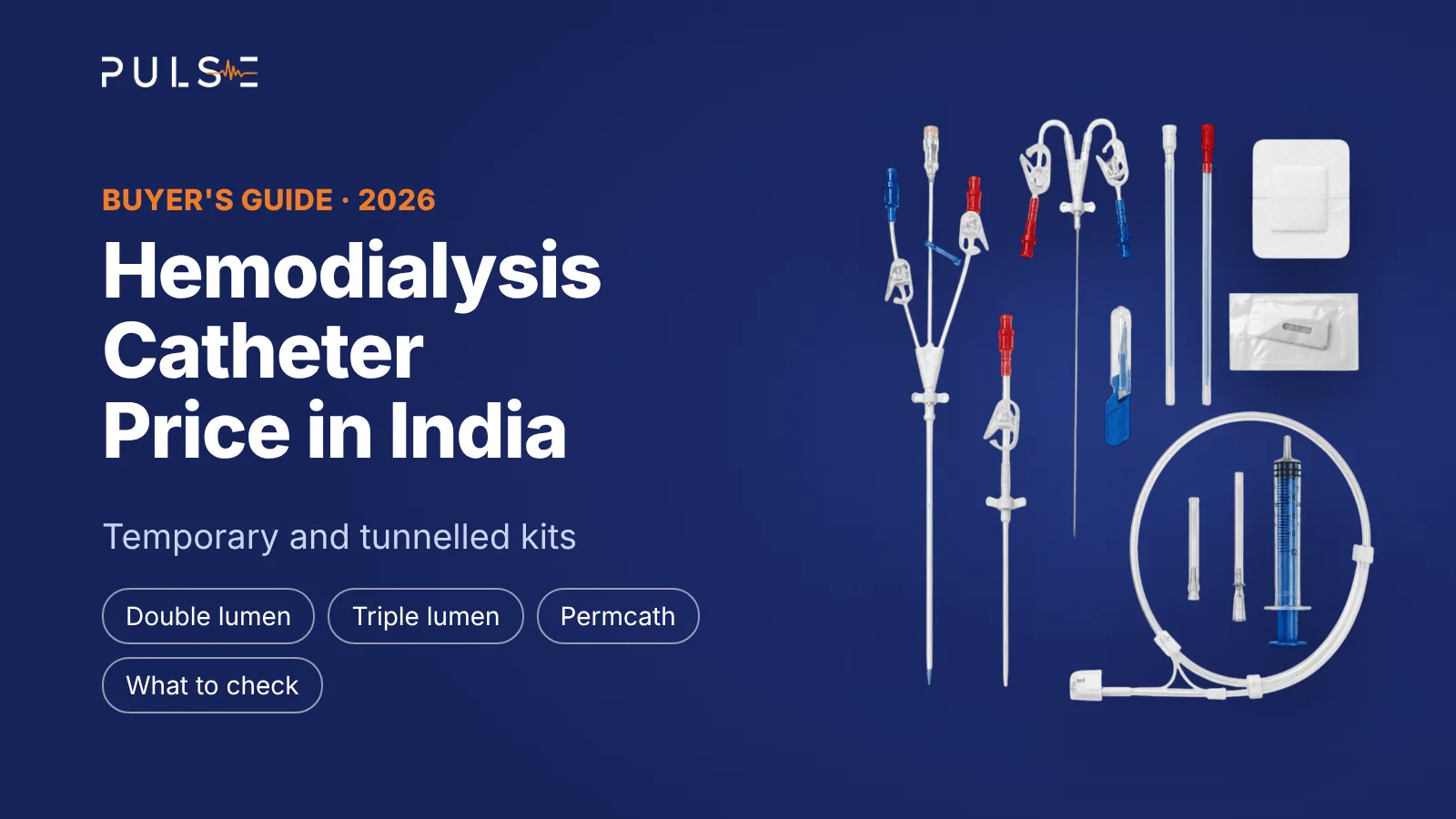
For catheter types and prices, see our haemodialysis catheter price guide.
How a Fistula Is Used: Needles
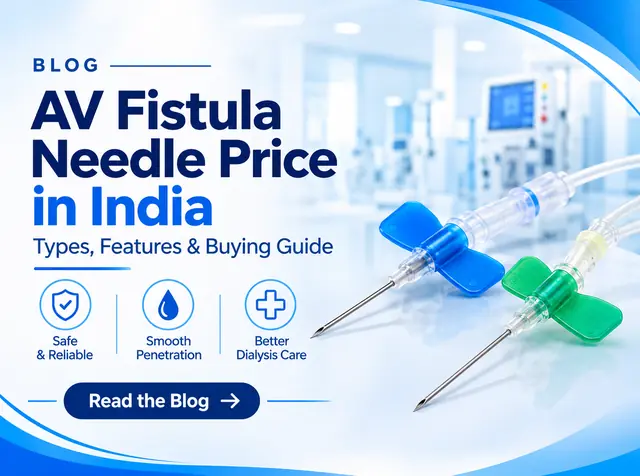
At each session, two needles go into the fistula: one takes blood to the dialysis machine and one returns it. Needle size (gauge) and length matter for blood flow and comfort. See our AV fistula needle price guide for gauges and costs.
How to Care for a Fistula
- Check it every day: look for redness, swelling or pus, and feel for the buzzing vibration (thrill). If the thrill stops, call your dialysis unit at once.
- Protect the arm: no tight watches or bands, and do not carry heavy things across it.
- Exercise: squeezing a soft ball a few times a day can help a new fistula mature.
- Watch the hand: a cold, pale or blue hand, or aching during dialysis, can mean the access is taking too much blood. Tell your doctor.
For Dialysis Units
A dialysis unit needs supplies for both fistula and catheter patients: fistula needles, catheters, blood tubing sets, dialysers and transducer protectors. See our dialysis unit setup cost guide.
Pulse Dialysis Access Products
- PD-Canova AV fistula needles: 15G, 16G and 17G, with or without back eye, twin sets.
- PD-Cath haemodialysis catheters: single, double and triple lumen for temporary access, in polyurethane, radiopaque and MRI compatible.
AV Fistula vs Catheter: Key Facts
- There are three types of haemodialysis access: AV fistula, AV graft and catheter.
- An AV fistula has the lowest infection and clotting risk and lasts the longest.
- A fistula needs about 6 weeks to several months to mature; some never do.
- A catheter can be used the same day but has the highest infection risk.
- Check a fistula daily for the thrill and for redness, swelling or pus.
AV Fistula vs Catheter: FAQs
Which is better for dialysis, a fistula or a catheter?
An AV fistula is usually better long term: it has the lowest infection and clotting risk and lasts longest. A catheter can be used at once but has the highest infection risk.
How long does an AV fistula take to mature?
About 6 weeks to several months. Some fistulas never fully mature, so it is best to plan access early with a kidney doctor.
What is an AV graft?
An artery and vein joined with a soft tube. It can be used within days to a few weeks, but has more infection and clotting risk than a fistula.
When is a dialysis catheter used?
When dialysis must start urgently, while a fistula matures, or when a fistula or graft is not possible.
How do I care for my fistula?
Check it daily for the buzzing thrill and for redness or swelling, avoid tight bands or carrying weight on that arm, and call your unit if the thrill stops.
Does Pulse supply fistula needles and dialysis catheters?
Yes. Pulse supplies PD-Canova AV fistula needles and PD-Cath haemodialysis catheters. Message +91 90711 01108 for a quote.
Sources
- What are your hemodialysis access options? (Interwell Health, Julie Dominguez MD, 26 March 2025): fistula, graft and catheter comparison
- Vascular access for hemodialysis (Life Options, Medical Education Institute, updated 13 November 2025): maturation times, catheter risk, fistula care, steal syndrome
Related Reading