Dialysis Diet: What to Eat and Limit on Haemodialysis
Food and drink matter a lot on haemodialysis, because the machine cleans the blood only a few hours a week. This guide explains the five things people on dialysis are usually asked to watch, based on National Kidney Foundation advice.
On haemodialysis, people usually need more protein, and less salt (under 2,300 mg of sodium a day). Many also need to limit potassium, phosphorus and fluid, depending on their blood tests and how much urine they still make. A kidney dietitian sets the exact limits.
Why Diet Matters on Dialysis
Healthy kidneys work all day. Haemodialysis at a centre usually runs about three times a week, so salt, potassium, phosphorus and water build up in between. Diet helps keep these in a safe range until the next session. People on frequent or nightly home dialysis usually have fewer limits.
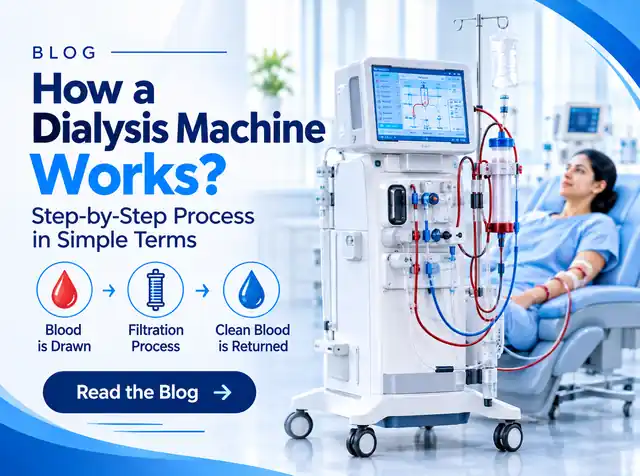
For how a session cleans the blood, see our how a dialysis machine works guide.
The Five Things to Watch
| Nutrient | Usual advice | Why |
|---|---|---|
| Protein | Eat more; a protein food at every meal | Keeps muscles strong, helps healing and fights infection |
| Sodium (salt) | Less than 2,300 mg a day | Salt makes you thirsty and holds water in the body |
| Potassium | Limit only if blood levels are high | Too high or too low can cause dangerous heart problems |
| Phosphorus | Limit, based on blood tests | Dialysis does not remove it well; too much weakens bones |
| Fluid | Often about 1 to 2 litres a day or more, based on urine output | Too much fluid strains the heart |
All advice in this guide is from the US National Kidney Foundation (NKF). Your own limits depend on your tests.
Running a dialysis unit?Get a written quote, brochure or demo from the Pulse team.
Potassium
NKF lists bananas, oranges, potatoes, tomatoes, milk, yoghurt, beans, nuts and seeds among higher-potassium foods. You may not need to cut them all; portion size matters. Avoid salt substitutes that contain potassium, and additives such as potassium sorbate.
Phosphorus
Phosphorus is high in dairy, nuts, beans and many processed foods. Phosphate added to packaged foods is absorbed most easily, so check labels for words with "phos", such as disodium phosphate. Doctors often prescribe a phosphate binder, taken with every meal and snack, to block some of it.
Fluid
Fluid means anything liquid at room temperature: water, tea, coffee, milk, juice, soup, dal water, ice and ice cream. Too much fluid causes puffy eyes, hands or feet, weight gain, breathlessness and high blood pressure.
- Weigh yourself before each session; your team uses this to plan fluid removal.
- Eating less salt is the best way to feel less thirsty.
- Tell your team about sudden weight gain, swelling or breathlessness.
Large fluid gains mean more fluid must be removed at each session, which can cause cramps and low blood pressure. See our low blood pressure and cramps during dialysis guide.
Work With a Kidney Dietitian
Limits change with blood tests, urine output and how often you dialyse. We suggest asking your dietitian for a plan built around the foods you already eat, and taking only the supplements your kidney doctor prescribes. Some herbal remedies can harm people with kidney disease.
For Dialysis Units
Diet works with good dialysis. Reliable machines and the right dialysers help each session clear enough waste. See our dialysis adequacy guide.
Dialysis Diet: Key Facts
- People on haemodialysis usually need more protein, with a protein food at every meal.
- NKF advises less than 2,300 mg of sodium a day.
- Potassium limits depend on blood levels; too much or too little can cause heart problems.
- Haemodialysis does not remove phosphorus well, so binders are often taken with meals.
- Fluid limits are often about 1 to 2 litres a day or more, based on urine output.
Dialysis Diet: FAQs
What should I eat on dialysis?
Usually more protein, with a protein food at every meal, and less salt. Many people also limit potassium, phosphorus and fluid, as their dietitian advises.
How much salt can a dialysis patient have?
The National Kidney Foundation advises less than 2,300 mg of sodium a day.
How much water can a dialysis patient drink?
It depends on how much urine you still make. For centre haemodialysis it is often about 1 to 2 litres a day or more. Your team sets your limit.
Which foods are high in potassium?
Bananas, oranges, potatoes, tomatoes, milk, yoghurt, beans, nuts and seeds are among higher-potassium foods. Portion size matters.
Why is phosphorus limited on dialysis?
Dialysis does not remove phosphorus well. Too much can weaken bones and damage blood vessels and the heart.
Does Pulse supply dialysis equipment?
Yes. Pulse supplies the PDM-6000 haemodialysis machine, dialysers, blood tubing sets and fistula needles. Message +91 90711 01108 for a quote.
Sources
- Hemodialysis and Your Diet (National Kidney Foundation, updated 28 August 2024): protein, sodium limit, potassium, phosphorus, fluid limits and what counts as fluid, supplements
- Nutrition and Home Dialysis (National Kidney Foundation, updated 5 March 2025): high-potassium and high-phosphorus foods, effects of extra fluid, phosphate binders with meals
Related Reading